

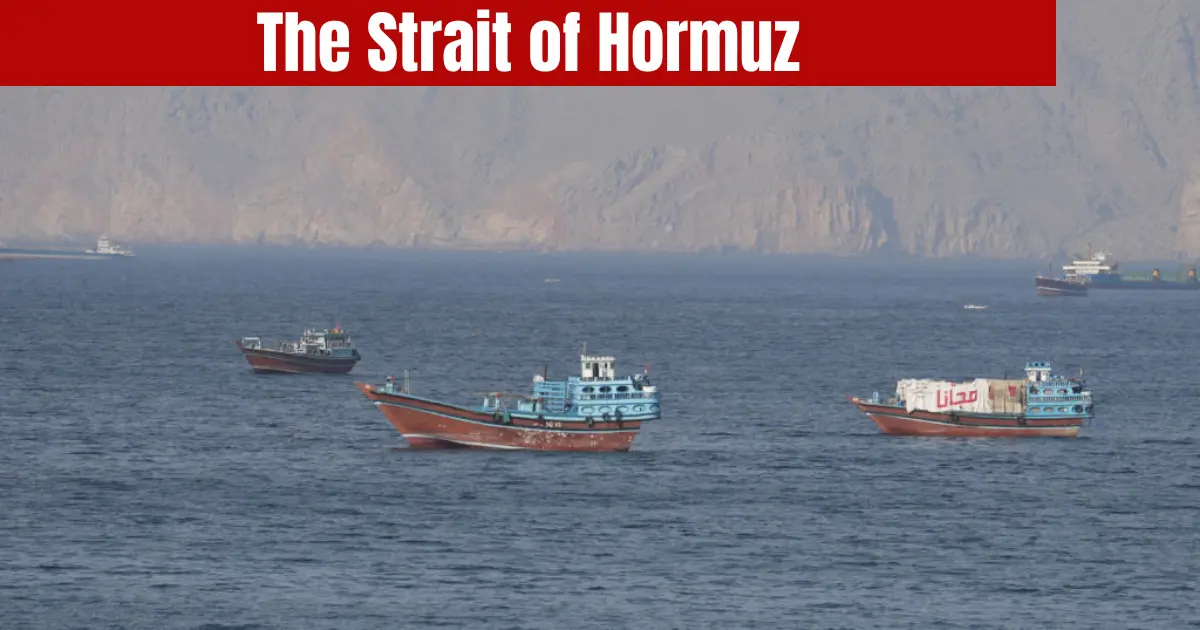
The Strait of Hormuz is one of the most closely watched waterways in the world, and whenever tensions rise in global politics or energy markets, it quickly returns to the center of international attention. In recent discussions and reporting around global security and oil trade, the strait has again become a focal point due to renewed geopolitical friction, naval activity, and concerns about the stability of energy supplies.
To understand the “latest news” surrounding the Strait of Hormuz, it is important to first understand what makes this narrow stretch of water so critical, why so many global powers are involved in its security, and what current developments suggest about its future.
The Geographic and Strategic Importance of the Strait of Hormuz
The Strait of Hormuz is a narrow maritime passage located between the Persian Gulf and the Gulf of Oman. It lies between Iran to the north and the United Arab Emirates and Oman to the south.
Despite being only about 40 kilometers wide at its narrowest point, the strait functions as one of the most important energy corridors on Earth. A significant portion of the world’s crude oil and liquefied natural gas passes through it daily, connecting major producers in the Middle East to global markets in Asia, Europe, and beyond.
The shipping lanes are tightly confined, which makes navigation both highly regulated and potentially vulnerable to disruption. Any incident—whether political, military, or accidental—can have immediate effects on global oil prices and shipping insurance costs.
May Be You Like It
Breaking News on Capitol Hill Today – Key Developments Shaping America’s Political Landscape
Breaking News Zambia Today – Understanding the Stories Shaping the Nation
Breaking News Ukraine – Understanding the Latest Developments and Their Global Impact
Breaking News Update – Why Real-Time Information Matters More Than Ever
Why the Strait of Hormuz Is Always in the News
When people search for “latest news Strait of Hormuz,” they are usually trying to understand developments related to one or more of the following ongoing themes:
- Naval tensions between regional and global powers
- Threats or statements about blocking the waterway
- Shipping disruptions or tanker incidents
- Oil price fluctuations linked to geopolitical risk
- Military deployments and patrols in the region
- Diplomatic negotiations involving Gulf security
Even when there is no single major incident, the strait remains in the news because of its strategic sensitivity. Small developments are often interpreted as potential signals of larger geopolitical shifts.
The Role of Iran and Regional Security Dynamics
A central actor in any discussion of the Strait of Hormuz is Iran. The country sits directly along the northern coast of the strait and has historically emphasized its strategic influence over the passage.
Iran has repeatedly stated that it has the capability to disrupt or block shipping through the strait if it perceives existential threats or severe external pressure. While such statements are typically framed as deterrence rather than active policy, they contribute significantly to global attention and market sensitivity.
On the other side of the Gulf, neighboring states such as the United Arab Emirates and the Sultanate of Oman maintain a strong interest in ensuring that maritime traffic remains stable and uninterrupted.
Oman, in particular, plays a diplomatic role in regional mediation efforts and has often been involved in backchannel communications between rival powers, helping to reduce tensions when they escalate.
May Be You Like It
What Are the Top 5 Headlines of Today? Top News Stories and Updates
Latest News Dubai Attack – What Is Happening in Dubai and Why the World Is Watching Closely
The Strait of Hormuz – Latest News, Strategic Importance, and What’s Happening Now
Latest News 8th Pay Commission in Hindi – पूरी जानकारी और ताज़ा अपडेट
Latest News Gulf War – Understanding the Legacy, Ongoing Impact, and Modern Relevance
Latest News Between the US and Iran – Rising Tensions, Fragile Diplomacy, and Global Impact
Maritime Traffic and Global Energy Dependence
One of the main reasons the Strait of Hormuz remains in the headlines is its role in global energy logistics. A large share of seaborne oil exports from countries such as Saudi Arabia, Iraq, Kuwait, and the United Arab Emirates must pass through this corridor.
Even when alternative pipelines exist, they are not sufficient to fully replace the volume transported through the strait. As a result, global markets remain highly sensitive to any perceived threat in the region.
Insurance premiums for oil tankers tend to rise quickly when tensions increase, even if no actual disruption occurs. This “risk pricing” effect often leads to immediate reactions in global crude oil benchmarks.
Military Presence and International Naval Activity
Another important factor in the “latest news” cycle around the Strait of Hormuz is the continuous presence of naval forces from multiple countries.
The United States Navy and allied forces regularly patrol the region as part of broader maritime security operations. These missions are intended to ensure freedom of navigation and deter hostile actions against commercial shipping.
At the same time, Iran maintains its own naval and paramilitary maritime forces, which also operate in and around the strait. This overlapping presence of multiple armed actors contributes to a delicate balance that requires constant coordination and communication to avoid misunderstandings.
Occasionally, incidents such as vessel interceptions, drone sightings, or close encounters between patrol boats and commercial ships make international headlines. Even when resolved peacefully, these incidents reinforce the perception of risk.
Shipping Incidents and Commercial Risk
In recent years, shipping companies have reported periodic disruptions ranging from electronic interference with navigation systems to temporary detentions of vessels under disputed circumstances.
While not all incidents are politically motivated, the region’s high tension environment means that even minor events can be interpreted through a geopolitical lens.
Commercial shipping firms operating in the area often coordinate closely with naval escorts or rely on enhanced tracking systems to reduce risks. However, the confined geography of the strait limits routing options, meaning ships cannot easily avoid the region.
This structural constraint is one of the key reasons why the Strait of Hormuz remains such a persistent global concern.
Oil Prices and Global Market Sensitivity
One of the most immediate global effects of developments in the Strait of Hormuz is reflected in oil markets. Traders closely monitor news from the region because even speculative reports can lead to price volatility.
When tensions rise, crude oil prices often increase due to concerns about potential supply disruption. Conversely, when diplomatic progress or stability is reported, markets may ease.
This sensitivity demonstrates how interconnected global energy systems are with regional geopolitics. Even though actual disruptions may be rare, perceived risk plays a major role in price formation.
Diplomatic Efforts and De-escalation Mechanisms
Despite periodic tensions, there are ongoing diplomatic efforts aimed at maintaining stability in the region. Several countries, including Oman and other Gulf intermediaries, frequently engage in dialogue initiatives designed to reduce misunderstandings between rival states.
International stakeholders also encourage the development of maritime communication channels to prevent accidental escalation at sea. These mechanisms include hotlines, coordinated naval signaling protocols, and joint maritime awareness initiatives.
While these efforts do not eliminate underlying political disagreements, they help reduce the likelihood that incidents at sea escalate into broader conflict.
Why the Strait of Hormuz Matters Globally
The importance of the Strait of Hormuz extends far beyond the Middle East. It is a critical node in the global supply chain for energy, and disruptions would have immediate consequences for economies around the world.
Countries in Asia, Europe, and North America all depend on stable energy flows that include shipments passing through this strait. This interdependence is why even distant countries closely follow developments in the region.
The strategic importance of the strait also explains why multiple global powers maintain a presence there, even if they are not directly involved in regional disputes.
May Be You Like It
Viral News Around the World – How Stories Spread, Shape Opinions, and Define Our Digital Age
Latest Viral News in Social Media – How Trends Shape the Digital World Today
Viral News Bangla Today – Understanding the Latest Trends, Stories, and Social Media Buzz
Viral News in Hindi Today – How Trending Stories Shape the Digital World
Viral News Anchor Female – How Women in Broadcast News Become Internet Sensations
Potential Scenarios for the Future
When analyzing “latest news” and long-term trends, experts often consider several possible scenarios for the Strait of Hormuz:
Continued Managed Stability
In this scenario, tensions remain but are contained through diplomatic channels and naval deterrence. Shipping continues uninterrupted, and markets stabilize around predictable risk levels.
Periodic Escalation Without Closure
Here, the region experiences recurring incidents, but none escalate into full disruption. Insurance costs and oil prices fluctuate, but global supply remains intact.
Temporary Disruption Scenario
A short-term blockade attempt or major incident could lead to temporary shipping delays. This would likely trigger immediate global market reactions but could be resolved diplomatically or through naval intervention.
Broader Regional Conflict (Low Probability but High Impact)
In the most severe scenario, escalation could involve multiple regional actors and significantly disrupt maritime traffic. This is widely considered unlikely due to the economic consequences for all involved parties, but it remains part of strategic planning discussions.
Media Coverage and Public Attention
The reason the Strait of Hormuz consistently appears in “latest news” searches is not only because of real-time events but also due to its symbolic importance. It represents the intersection of energy security, military strategy, and international diplomacy.
News coverage tends to intensify whenever there are:
- Statements from political leaders about maritime control
- Reports of naval exercises in the Gulf region
- Changes in global oil prices tied to geopolitical risk
- Incidents involving commercial tankers
- Diplomatic talks involving Middle Eastern security
Even when no dramatic event is occurring, the strait remains a barometer for global stability.
Conclusion
The Strait of Hormuz continues to be one of the most strategically significant waterways in the world. The “latest news” surrounding it is shaped not by a single event, but by an ongoing combination of geopolitical tensions, naval activity, energy dependence, and diplomatic efforts.
With Iran on one side and the United Arab Emirates and Oman on the other, the strait sits at the heart of a complex regional balance. Meanwhile, global actors such as the United States Navy and other international stakeholders continue to play roles in maintaining maritime security.
Although tensions occasionally rise and headlines highlight potential risks, the system has so far remained largely stable due to strong economic incentives for all parties to avoid disruption.
As global energy demand continues and geopolitical conditions evolve, the Strait of Hormuz will almost certainly remain a critical focus of international attention—making it a constant presence in global news cycles and strategic discussions.
May Be You Like It
More Supermarket New Barrackpore – Your Complete Guide To Smart Grocery Shopping
More Important News – Why Staying Informed Matters More Than Ever
Some More News Merch – Complete Guide to Official Merchandise
More Snow New York – What to Expect from Changing Winter Weather
More Than News – Meaning Importance And the Future of Digital Journalism
