

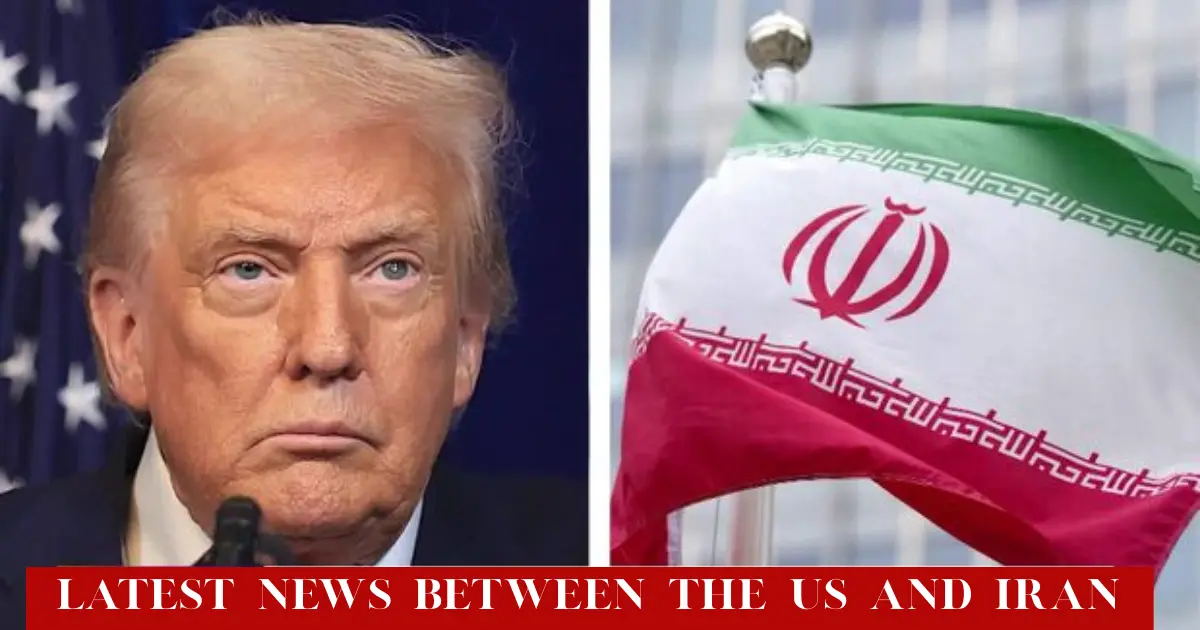
The relationship between the United States and Iran has once again become one of the most closely watched and volatile geopolitical issues in the world. As of June 2026, the situation is marked by a dangerous mix of military escalation, failed diplomacy, energy market instability, and uncertain back-channel negotiations. While both countries publicly claim they still prefer diplomacy over war, recent developments suggest that tensions are at one of their highest points in years.
This article explores the latest news between the US and Iran, the causes of the current crisis, ongoing military activity, diplomatic efforts, and the global consequences of this confrontation.
A Rapid Escalation of Military Tensions
The most recent news shows a sharp escalation in direct conflict between the United States and Iran. Over the past several days, both sides have exchanged strikes in a pattern of retaliation that has increasingly resembled open warfare.
According to multiple reports, US forces launched a series of missile and air operations targeting Iranian military infrastructure, including radar systems, air defense sites, and communication facilities. In one major operation, dozens of Tomahawk missiles were reportedly used in coordinated strikes against strategic targets inside Iran.
In response, Iranian forces carried out attacks on US military positions across the Middle East, including bases in Bahrain, Kuwait, and Jordan. Iranian officials have framed these attacks as defensive measures following repeated US military actions in Iranian territory.
The situation intensified after an incident involving the downing of a US military helicopter near the Strait of Hormuz, a critical shipping route for global oil supplies. This event triggered a cycle of retaliatory strikes that quickly escalated.
The Strait of Hormuz has become a focal point of the conflict. Iran has threatened restrictions on maritime traffic in the region, while the United States has increased naval presence to secure shipping lanes. The risk of accidental clashes in this narrow and strategically important waterway has raised international concern.
May Be You Like It
Breaking News on Capitol Hill Today – Key Developments Shaping America’s Political Landscape
Breaking News Zambia Today – Understanding the Stories Shaping the Nation
Breaking News Ukraine – Understanding the Latest Developments and Their Global Impact
Breaking News Update – Why Real-Time Information Matters More Than Ever
Diplomatic Efforts Under Pressure
Despite the military escalation, diplomatic channels between Washington and Tehran have not completely collapsed. Behind the scenes, negotiations continue through intermediaries, including regional powers and European partners.
Recent reports suggest that both sides are still engaged in indirect talks focused on nuclear issues, sanctions relief, and regional security guarantees. However, progress has been limited, and trust remains extremely low.
US officials have repeatedly stated that any agreement must include strict limits on Iran’s nuclear program and restrictions on ballistic missile development. Washington has also demanded that Iran reduce its support for regional armed groups.
Iran, on the other hand, insists that sanctions must be lifted and that its right to peaceful nuclear energy must be respected. Iranian leaders have also demanded guarantees against future military attacks, arguing that previous agreements failed to protect their national security.
High-level officials, including US Vice President JD Vance, have indicated that a diplomatic deal is still possible, but could take weeks or even months to finalize. At the same time, military pressure is being used as leverage in negotiations, making the situation highly unstable.
Nuclear Concerns at the Center of the Conflict
The core issue driving US-Iran tensions remains Iran’s nuclear program. Washington and its allies continue to express concern that Iran could move closer to developing nuclear weapons capability.
Iran denies these allegations, insisting that its nuclear program is purely for civilian energy and research purposes. However, disagreements over uranium enrichment levels and international inspections have repeatedly derailed negotiations.
In recent months, talks mediated through Oman and other intermediaries had shown some progress. There were brief moments when officials suggested a possible breakthrough was within reach. However, those hopes collapsed following renewed military escalation.
The nuclear issue is particularly sensitive because it is tied directly to regional power balance. Israel and several Gulf countries have also expressed strong concerns about Iran’s nuclear capabilities, adding further pressure on the United States to take a firm stance.
May Be You Like It
What Are the Top 5 Headlines of Today? Top News Stories and Updates
Latest News Dubai Attack – What Is Happening in Dubai and Why the World Is Watching Closely
The Strait of Hormuz – Latest News, Strategic Importance, and What’s Happening Now
Latest News 8th Pay Commission in Hindi – पूरी जानकारी और ताज़ा अपडेट
Latest News Gulf War – Understanding the Legacy, Ongoing Impact, and Modern Relevance
Latest News Between the US and Iran – Rising Tensions, Fragile Diplomacy, and Global Impact
The Strait of Hormuz Crisis and Global Oil Markets
One of the most serious consequences of the US-Iran confrontation is its impact on global energy markets. The Strait of Hormuz, through which a large portion of the world’s oil supply passes, has become a potential flashpoint.
Iran has repeatedly warned that it could restrict or block access to the strait if attacks continue. Even the threat of disruption has caused volatility in global oil prices.
Oil markets have reacted strongly to each new development in the conflict. Prices have fluctuated significantly, with analysts warning that continued instability could push crude oil to extremely high levels if supply routes are disrupted.
Energy experts note that even temporary interruptions in shipping through the region could affect global fuel prices, inflation rates, and economic stability worldwide. Countries heavily dependent on imported oil are particularly vulnerable to these shocks.
Regional Spillover and Proxy Conflicts
The US-Iran conflict does not exist in isolation. It is closely linked to broader regional tensions involving multiple actors, including Israel, Hezbollah, and various militia groups across the Middle East.
Iran has long been accused by the United States and its allies of supporting proxy forces in countries such as Lebanon, Iraq, Syria, and Yemen. These groups have occasionally engaged in attacks on US or allied interests in the region.
In the current crisis, there are reports of increased activity by these groups, further complicating the security situation. Meanwhile, Israel has conducted its own military operations targeting Iranian-linked assets in the region, adding another layer of complexity.
The interconnected nature of these conflicts means that a single incident can quickly escalate into a wider regional confrontation involving multiple countries and non-state actors.
Domestic Pressure in Both Countries
Both Washington and Tehran are facing internal political pressures that influence their foreign policy decisions.
In the United States, the administration is under scrutiny for its handling of the crisis. While some political leaders argue that strong military action is necessary to deter Iran, others warn that the US risks being dragged into another prolonged conflict in the Middle East.
Public opinion remains divided, with concerns about military casualties, economic costs, and long-term strategic consequences.
In Iran, the government is also dealing with internal challenges, including economic difficulties, sanctions pressure, and social tensions. The leadership has taken a strong public stance against US actions, portraying the conflict as resistance against foreign aggression.
At the same time, Iran must balance military responses with the risk of further economic isolation and domestic instability.
May Be You Like It
Viral News Around the World – How Stories Spread, Shape Opinions, and Define Our Digital Age
Latest Viral News in Social Media – How Trends Shape the Digital World Today
Viral News Bangla Today – Understanding the Latest Trends, Stories, and Social Media Buzz
Viral News in Hindi Today – How Trending Stories Shape the Digital World
Viral News Anchor Female – How Women in Broadcast News Become Internet Sensations
Humanitarian and Economic Consequences
As tensions escalate, the humanitarian impact is becoming increasingly serious. Military activity in the region has raised concerns about civilian safety, especially in areas near strategic infrastructure.
There are also reports of disruptions to trade routes, shipping delays, and rising insurance costs for vessels operating in the Gulf region.
The broader Middle Eastern economy is feeling the effects as well. Countries dependent on tourism, trade, and energy exports are experiencing increased uncertainty.
Global markets are reacting to every major development, highlighting how interconnected the modern global economy is with Middle Eastern stability.
The Role of International Mediators
Several countries and organizations are attempting to prevent further escalation. Regional powers such as Pakistan, Oman, and Qatar have played quiet but important roles in facilitating dialogue between the US and Iran.
European nations have also expressed concern and are pushing for renewed diplomatic efforts, particularly focusing on nuclear negotiations.
However, mediation efforts face significant obstacles. The level of mistrust between the US and Iran remains extremely high, and both sides are reluctant to make concessions under pressure.
Despite these challenges, diplomatic channels remain open, suggesting that a negotiated solution is still possible, even if unlikely in the short term.
Public Messaging and Psychological Warfare
An important aspect of the current crisis is the role of public messaging. Leaders on both sides have made strong public statements warning of consequences if the other side does not back down.
These statements serve multiple purposes: they are aimed at domestic audiences, international allies, and the opposing side itself.
The rhetoric has contributed to heightened tensions, but it also reflects the strategic use of communication in modern geopolitical conflicts.
While public threats are often followed by private negotiations, they also increase the risk of miscalculation, where a misunderstanding could lead to unintended escalation.
What Happens Next?
The future of US-Iran relations remains highly uncertain. Several possible scenarios exist:
- Limited escalation continues – where both sides maintain pressure but avoid full-scale war.
- Diplomatic breakthrough – where a mediated nuclear agreement stabilizes relations.
- Wider regional conflict – if strikes and counterstrikes expand beyond current boundaries.
- Long-term stalemate – where conflict continues at a low but persistent level.
Most analysts believe that the next few weeks will be critical in determining which path the situation follows.
Conclusion
The latest news between the US and Iran reflects a dangerous combination of military escalation and fragile diplomacy. While both sides continue to express willingness for negotiation, ongoing strikes, regional instability, and nuclear tensions are pushing the relationship toward a critical point.
The Strait of Hormuz crisis, nuclear negotiations, and proxy conflicts all contribute to a complex geopolitical landscape with global consequences. Energy markets, international security, and regional stability are all directly affected by the outcome of this confrontation.
Whether the situation moves toward war or diplomacy will depend on decisions made in the coming days and weeks. For now, the world watches closely as one of the most important and volatile international relationships continues to evolve.
May Be You Like It
More Supermarket New Barrackpore – Your Complete Guide To Smart Grocery Shopping
More Important News – Why Staying Informed Matters More Than Ever
Some More News Merch – Complete Guide to Official Merchandise
More Snow New York – What to Expect from Changing Winter Weather
More Than News – Meaning Importance And the Future of Digital Journalism
