

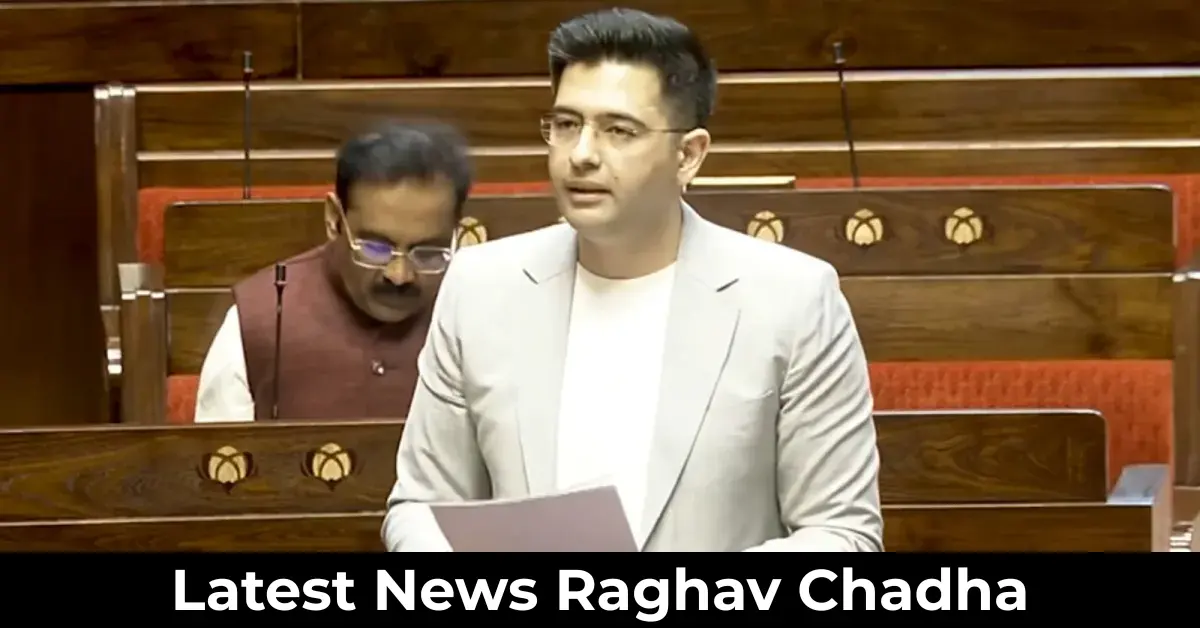
Raghav Chadha has remained one of the most talked-about political figures in India over the past few years. Known for his articulate speeches, youthful image, and rapid rise within the political landscape, Chadha has built a reputation as one of the most recognizable faces of modern Indian politics. Recently, however, the political spotlight has intensified around him due to dramatic developments that have reshaped both his political journey and the future of the party he once represented.
The latest news surrounding Raghav Chadha has generated widespread debate among political observers, supporters, and critics alike. From leadership changes within his former party to a significant political realignment, Chadha has found himself at the center of one of the biggest political stories of 2026. These developments have not only affected his own political future but have also had implications for national politics, parliamentary dynamics, and the evolving political landscape in Punjab and Delhi.
Who Is Raghav Chadha?
Before examining the latest developments, it is important to understand why Raghav Chadha commands such attention.
Born in 1988, Chadha is a chartered accountant by profession and entered public life through the anti-corruption movement that eventually led to the formation of the Aam Aadmi Party (AAP). Over the years, he became one of the party’s most visible and influential leaders. He served as a Member of the Delhi Legislative Assembly and later became a Rajya Sabha Member of Parliament representing Punjab. His strong communication skills, parliamentary interventions, and policy-focused approach helped him gain recognition across the country.
Chadha’s popularity also expanded beyond politics after his marriage to actress Parineeti Chopra, making him a familiar name among audiences who do not usually follow political affairs closely. Nevertheless, his political career has remained the primary reason for his national prominence.
The Political Turning Point of 2026
The biggest story involving Raghav Chadha in 2026 revolves around a major political shift that surprised many observers.
Earlier in the year, reports emerged suggesting growing differences between Chadha and sections of the leadership within his party. Speculation intensified when he was removed from an important parliamentary leadership position. Political analysts viewed this development as an indication that internal tensions had reached a critical stage.
The situation escalated dramatically when Chadha, along with several other Rajya Sabha members, announced a decision to part ways with the party and align with the Bharatiya Janata Party (BJP). The move immediately became one of the most discussed political developments of the year because it involved a significant number of parliamentarians and altered the balance of power in the Upper House of Parliament.
For many political observers, the decision represented more than just an individual political switch. It was viewed as a major realignment with long-term implications for opposition politics and parliamentary strategy.
Why Did Raghav Chadha Leave His Former Party?
One of the most frequently asked questions in recent weeks has been why Chadha decided to leave the political organization he had helped build over more than a decade.
According to public statements made after his departure, Chadha expressed concerns about the internal functioning of the party. He suggested that there was diminishing space for leaders who wished to raise questions or pursue independent viewpoints. He also criticized what he described as the direction in which the organization was moving.
Supporters of Chadha argue that his decision was driven by political principles and frustration with internal decision-making processes. Critics, however, contend that the move was motivated by political calculations and changing electoral realities.
Regardless of the interpretation, there is little doubt that the departure marked the most significant turning point of Chadha’s political career so far.
Impact on National Politics
The implications of Chadha’s decision extend beyond his personal political future.
The departure of multiple Rajya Sabha members created a substantial challenge for his former party. Political commentators described the episode as one of the most serious internal crises in the party’s history. The reduction in parliamentary strength has raised questions about future legislative influence and political strategy.
At the same time, the BJP benefited from the arrival of experienced parliamentarians with significant public visibility. Chadha’s move was especially notable because he had long been viewed as one of the most recognizable opposition voices in Parliament. His transition therefore carried symbolic as well as numerical importance.
Political experts believe that the event could influence future alliances and electoral calculations, particularly in northern India where Chadha enjoys a strong public profile.
Reactions Across the Political Spectrum
The latest news involving Raghav Chadha triggered strong reactions from political leaders across party lines.
Several leaders from his former party criticized the move and accused him of betraying the trust placed in him during his rise to national prominence. Statements from party representatives reflected disappointment and anger, with some leaders arguing that Chadha had benefited significantly from opportunities provided by the organization.
On the other hand, supporters of Chadha praised his decision as an example of political courage. They argued that leaders should be free to pursue paths that align with their vision and principles.
Meanwhile, opposition politicians and constitutional experts debated whether the circumstances surrounding the transition could lead to legal or procedural questions under anti-defection provisions. These discussions further increased media attention surrounding the issue.
Parliamentary Role and Performance
One reason the latest developments involving Chadha attracted so much attention is his track record in Parliament.
Throughout his tenure as a Rajya Sabha member, Chadha participated in discussions on a variety of subjects, including economic policy, governance reforms, public welfare, national security, and administrative accountability. His speeches frequently received attention on social media, helping him connect with younger audiences.
Even political opponents have often acknowledged his effectiveness as a communicator. His ability to present complex policy matters in accessible language contributed to his popularity among politically engaged citizens.
As a result, his future role within his new political environment is being closely watched by analysts who believe he could continue to play an influential parliamentary role.
The Punjab Connection
Punjab remains central to understanding Chadha’s political significance.
Although originally associated with Delhi politics, Chadha later became closely linked to Punjab through his Rajya Sabha representation and advisory responsibilities. His involvement in Punjab politics helped him develop a broader political profile beyond the national capital.
The recent developments have therefore sparked intense discussion within Punjab’s political circles. Questions are being raised about how his departure will affect political alignments in the state and whether his new political affiliation could influence future electoral contests.
Given Punjab’s strategic importance in Indian politics, Chadha’s role in the state is expected to remain a major topic of political analysis in the coming years.
Public Image and Popularity
Despite political controversies, Chadha continues to enjoy significant public visibility.
One factor contributing to his popularity is his image as a young and educated politician. In an era when many voters seek leaders who can communicate effectively on economic and governance issues, Chadha has often been presented as a representative of a newer generation of political leadership.
His social media presence has also helped him maintain direct engagement with citizens. Through speeches, interviews, and digital content, he has cultivated a strong personal brand that extends beyond traditional political boundaries.
Public reactions to his recent political move have been mixed, but there is little doubt that he remains one of the most recognized young politicians in India today.
Media Coverage and Public Debate
The latest news involving Raghav Chadha has dominated political headlines for weeks.
Television debates, newspaper editorials, digital media platforms, and social media discussions have all focused on the implications of his political shift. Supporters and critics continue to debate whether the move represents ideological evolution, political pragmatism, or a response to internal party dynamics.
This extensive coverage reflects Chadha’s status as a national political figure. Not every parliamentary leader receives such sustained media attention, highlighting the significance attached to his actions and statements.
The discussion has also raised broader questions about party loyalty, leadership structures, and the changing nature of political careers in India.
Challenges Ahead
Although Chadha’s political profile remains strong, significant challenges lie ahead.
First, he must establish his place within a new political framework and demonstrate how he can contribute effectively in his new role. Transitions of this magnitude often involve adjustments in political relationships, organizational responsibilities, and public expectations.
Second, he will need to address criticism from former colleagues and voters who may question his decision. Political realignments often generate skepticism, and Chadha’s ability to explain and defend his move will influence public perceptions.
Third, expectations from supporters are likely to increase. Many people who backed his decision will look for evidence that the change produces tangible political results.
Successfully navigating these challenges could strengthen his position. Failure to do so could create obstacles to future ambitions.
Future Political Prospects
Looking ahead, many observers believe Raghav Chadha remains a politician with significant potential.
His age, communication skills, parliamentary experience, and national recognition place him in a relatively strong position compared with many leaders of his generation. Whether he eventually takes on greater responsibilities within his new political environment remains to be seen, but few analysts doubt that he will continue to play an important role in public life.
Political careers are often defined by moments of transformation, and 2026 may ultimately be remembered as the year that reshaped Chadha’s trajectory. The consequences of his recent decisions are likely to unfold over several election cycles rather than in the immediate future.
Conclusion
The latest news about Raghav Chadha represents one of the most significant political stories of 2026. His departure from the party that helped launch his career, his alignment with a new political platform, and the resulting parliamentary consequences have generated intense national interest.
For supporters, the move reflects a leader willing to take bold decisions in pursuit of his political vision. For critics, it raises difficult questions about loyalty, ideology, and political strategy. Regardless of perspective, the developments have cemented Chadha’s position as one of the most closely watched figures in Indian politics.
As India’s political landscape continues to evolve, Raghav Chadha’s next steps will remain under scrutiny. Whether viewed as a reformer, strategist, or controversial political actor, he is certain to remain a prominent figure in national discussions. The coming months and years will determine how this dramatic chapter influences both his personal political journey and the broader trajectory of Indian politics.
